Blog
HUGE NEW FINES REVEALED FOR AGENTS UNDER RENTERS’ RIGHTS BILL

The Government has unveiled a sweeping new enforcement framework within the Renters’ Rights Bill, exposing landlords and letting agents to fines of up to £40,000 and potential criminal prosecution for non-compliance.
New guidance published alongside the Bill outlines a far more punitive regime than previously seen in the private rented sector, with penalties exceeding those under existing legislation such as selective licensing. The Bill is currently progressing through Parliament and is expected to become law later this year or early next year.
Major Penalties for Agents and Landlords
One of the most significant changes affects agents who market rental properties on behalf of landlords that have not joined the new Private Rented Sector Landlord Ombudsman.
Under the proposed rules:
An initial breach could attract a fine of up to £7,000
Repeated or continuing breaches could result in penalties of up to £40,000 or criminal prosecution
These fines are notably higher—by around £10,000—than penalties currently imposed for non-compliance with other housing regulations.
Mandatory Database and Ombudsman Registration
The Bill also introduces a Private Rented Sector Database, requiring landlords to register themselves and their properties. The database will hold key compliance information, including confirmation that properties meet minimum standards and mandatory legal requirements such as valid Gas Safety Certificates.
Landlords who fail to join the database and continue to let or advertise properties face:
Up to £7,000 for an initial breach
Up to £40,000 for repeated offences
Local authorities will be granted explicit powers to enforce compliance against landlords and agents who ignore these obligations.
While the database and ombudsman services will be free for tenants, landlords will be charged a fee described as “proportional and good value” to register.
Additional Fines Under the Bill
The guidance confirms several other areas where landlords and agents may face penalties of up to £7,000, including:
Overt discrimination against tenants with children or those in receipt of benefits
Encouraging or permitting competitive bidding for rental properties
Letting or managing homes that fail to meet the new Decent Homes Standard
Councils will also gain expanded powers, including the ability to:
Require landlords and agents to provide information
Enter business and residential premises for enforcement purposes
Issue civil penalties for illegal eviction, a power not previously available.
Property Compliance Insight
The Renters’ Rights Bill marks a decisive shift from guidance-led regulation to strict, high-stakes enforcement. What stands out is not just the size of the fines, but the breadth of responsibility placed on agents—even when failures originate with landlords.
Marketing a non-compliant property, relying on incomplete landlord information, or overlooking registration requirements could now expose agents to penalties that rival criminal sanctions. The margin for error is narrowing fast.
This is no longer about reacting when councils come knocking. Agents and landlords must understand what compliance looks like, how to evidence it, and how to maintain it continuously—from advertising and documentation to property standards and tenant interactions.
Those who fail to adapt risk turning everyday operational mistakes into six-figure problems.
Source: https://thenegotiator.co.uk/news/regulation-law-news/huge-new-fines-revealed-for-agents-within-renters-rights-bill/
Related Posts


A Smarter Way for Landlords to Let with Confidence
23rd Dec 2025

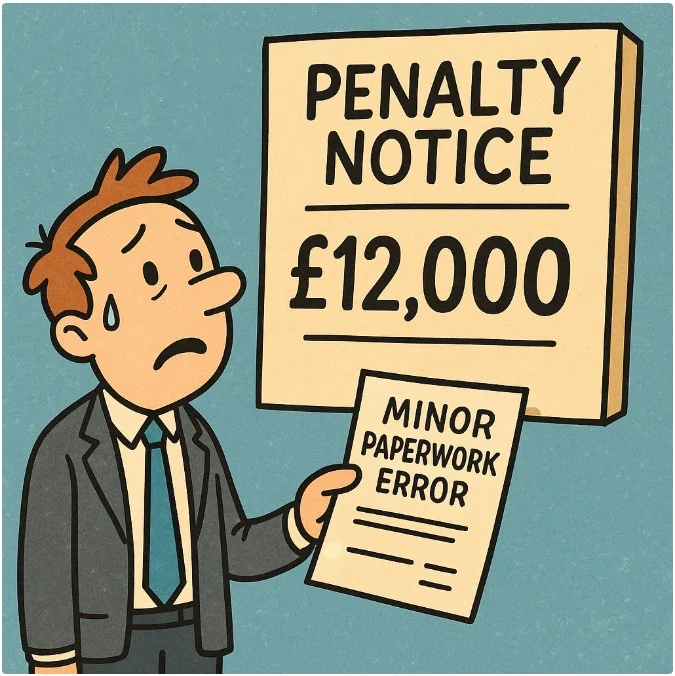



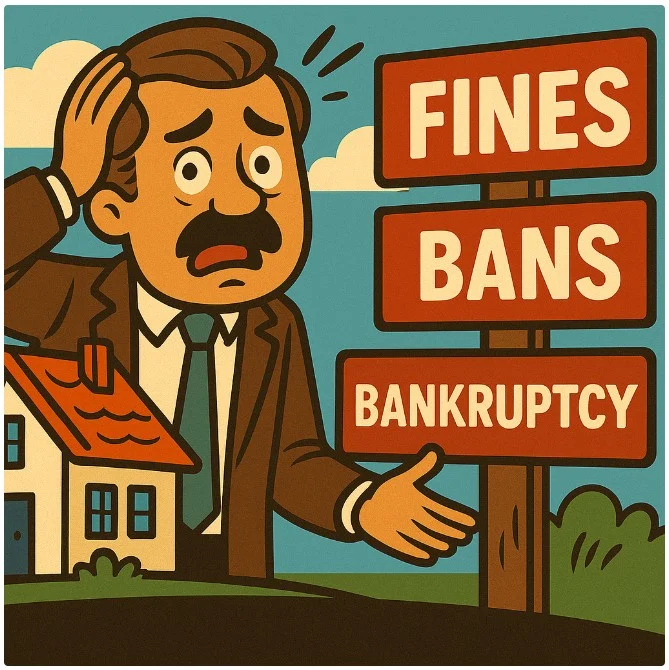
LANDLORDS RISK FINES, BANS AND BANKRUPTCY – THE ANSWER?
19th Jan 2026
Rogue Landlords Hit With Hefty Fines After Fatal Fire
19th Jan 2026


No-Fault Evictions to End in England from May 2026
19th Jan 2026

Sadiq Khan’s landlord licensing fines near £25m
15th Sep 2026



Landlords face £3.5bn HHSRS penalty exposure
15th Sep 2026