Blog
LANDLORDS RISK FINES, BANS AND BANKRUPTCY – THE ANSWER?
The
conversation among private landlords has changed. It is no longer mainly about
yields, regulation updates, or market cycles. It is now about survival. The
release of the government’s new civil penalty tables has pushed the sector into
unfamiliar territory. Ordinary operational mistakes can now lead to fines
running into tens of thousands of pounds, and the risk of a banning order is no
longer distant or theoretical.
Across
online forums, advisory meetings, and industry groups, landlords are voicing
the same concern. Many feel exposed, and many feel targeted. Some now feel
unwelcome in a market they have helped sustain for decades. This shift has
happened quickly, and it has changed what it means to be a landlord in the UK.
This
feeling of being unwelcome is not just emotional. It is backed up by policy
decisions that introduce penalties large enough to destabilise an entire
portfolio, alongside enforcement powers strong enough to remove a landlord from
the sector completely. At the same time, other European governments are
signalling a different approach. Portugal’s recent decision to cut rental tax
to 10 percent is a clear reminder that not every country is trying to push
private landlords out.
This
contrast matters because landlords are increasingly comparing risk, return, and
political attitude across borders. The UK appears to be moving in one
direction, while other jurisdictions are moving in another. The impact on
housing supply, investment confidence, and market stability will be felt long
before the first banning order under the new system is issued.
Landlords
are right to be concerned. The risks they now face are serious, and for some,
the financial consequences could be final.
The
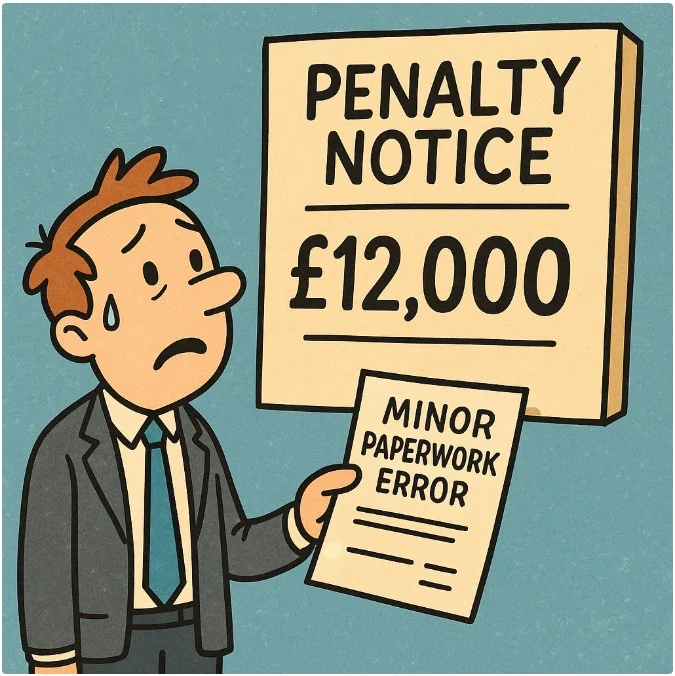
new civil penalty tables make the level of risk impossible to ignore. A breach
of selective licensing now starts at £12,000. A possession-related error starts
at £30,000. Reletting a property during a restricted period carries a £25,000
starting penalty. Breaching a banning order begins at £35,000. These figures
are not maximum fines. They are starting points. They reflect an expectation
that councils will enforce actively and consistently.
The
increase in enforcement goes beyond financial penalties. Councils now have a
clearer route to apply for banning orders. These orders do not simply punish;
they remove. A banning order can force a landlord out of the sector entirely,
revoke licences, place properties under enforced management arrangements, and
add the individual to the national rogue landlord database. Once imposed,
reversing the damage is extremely difficult and, in many cases, impossible.
When
high fines are combined with permanent commercial consequences, it raises
serious questions about policy direction. Private landlords provide the
majority of rented homes in the UK, yet they are now exposed to financial risks
greater than those faced by many other regulated professions. A simple
administrative mistake can now result in penalties that exceed those imposed for
far more dangerous conduct in other areas of law.
The
impact on landlord behaviour is already clear. Many landlords who once focused
on improving properties, expanding portfolios, or refinancing strategically now
spend their time assessing whether the potential returns still justify the
level of risk involved.
This
is not a prediction of market collapse. It is a straightforward observation.
When the cost of participation rises sharply, some participants will leave.
When another government sends a message that it wants landlords to stay, as
Portugal has done by cutting rental tax to 10 percent, investors take notice.
A
strong rental market can only exist where private investment is treated with
stability, respect, and proportionality. At present, the message many landlords
are receiving is the opposite. Uncertainty is increasing. Penalties are
increasing. Administrative risk is increasing. This is not a stable foundation
for a sector that houses millions of people.
This
year will be decisive for many landlords. Some will upgrade their systems,
tighten compliance, and remain in the sector. Others will reduce exposure or
exit altogether. What every landlord must recognise is that the risk
calculation has fundamentally changed. A single fine can now wipe out profits.
A banning order can destroy a business. For highly leveraged landlords facing
sudden enforcement, bankruptcy is no longer a distant concept.
The
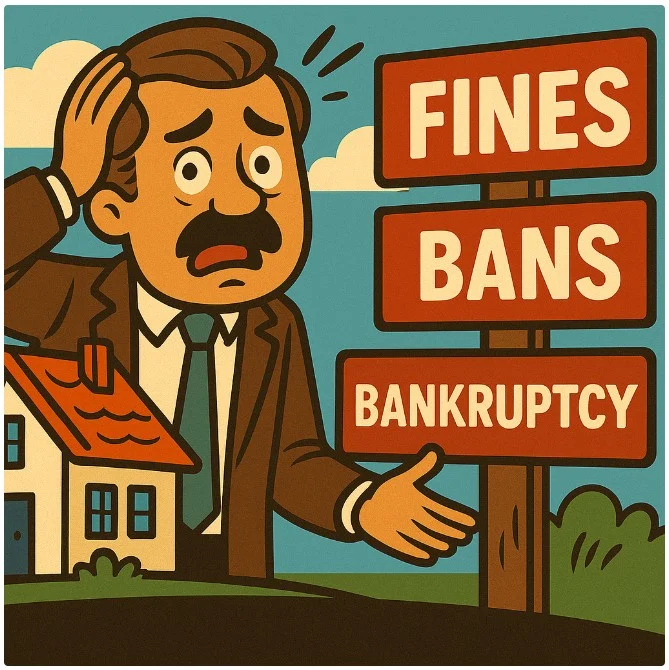
warning signs are clear. Landlords face the risk of heavy fines, bans, and
potential insolvency. The decisions made now will determine who survives this
new enforcement era and who does not.
For
landlords who decide that the risk is no longer acceptable, the next issue is
how to exit carefully and responsibly. Selling strategies are explored further
in the article linked below:
https://www.property118.com/should-you-sell-with-tenants-in-place-a-practical-strategy-many-landlords-overlook/
However,
selling is only part of the decision. The other part is where to place the
capital after exiting the sector. Rising regulatory risk in the UK does not
mean investment opportunities no longer exist. It means the landscape has
changed. Some landlords will look overseas to markets offering greater
stability and lower taxation. Others will move capital into asset classes with
less regulatory exposure. The key point is that landlords still have choices,
and with careful planning, proceeds from a property sale can be redeployed to
preserve income without carrying the growing compliance burden.
These are not easy decisions, but the current environment demands clear thinking. Holding rental property has never truly been passive, but it is now openly a highly regulated business. The exposure is higher, the penalties are more severe, and the consequences of non-compliance, intentional or not—can be permanent. Whether landlords choose to stay or leave will depend on their tolerance for risk, their ability to adapt, and their long-term objectives.
Angelmoves’ Insight
AngelMoves
Compliance Insight AngelMoves focuses on property compliance education, helping
landlords and letting agents clearly understand their legal responsibilities in
an increasingly strict regulatory environment.
As
civil penalties rise and enforcement becomes more consistent, many fines are
triggered not by intentional wrongdoing, but by avoidable mistakes such as poor
documentation, incorrect advertising, missed notices, or gaps in process.
AngelMoves helps landlords and agents understand how to stay compliant, how to
prepare and maintain the right documents, and how to structure their letting
practices to reduce risk.
By
providing practical guidance aligned with the Renters’ Rights Reform,
AngelMoves supports landlords who want to remain in the sector, operate
professionally, and avoid heavy fines, bans, and enforcement action.
In
a market where compliance failures can now end a business, understanding the
rules is no longer optional. It is essential.
Source:
https://www.property118.com/landlords-risk-fines-bans-bankruptcy/
Related Posts


A Smarter Way for Landlords to Let with Confidence
23rd Dec 2025




LANDLORDS RISK FINES, BANS AND BANKRUPTCY – THE ANSWER?
19th Jan 2026
Rogue Landlords Hit With Hefty Fines After Fatal Fire
19th Jan 2026


No-Fault Evictions to End in England from May 2026
19th Jan 2026


Sadiq Khan’s landlord licensing fines near £25m
15th Sep 2026



Landlords face £3.5bn HHSRS penalty exposure
15th Sep 2026