Blog
Landlords Face Extensive Legal Duties, but Enforcement Is Inconsistent: Key Findings from NRLA Publication
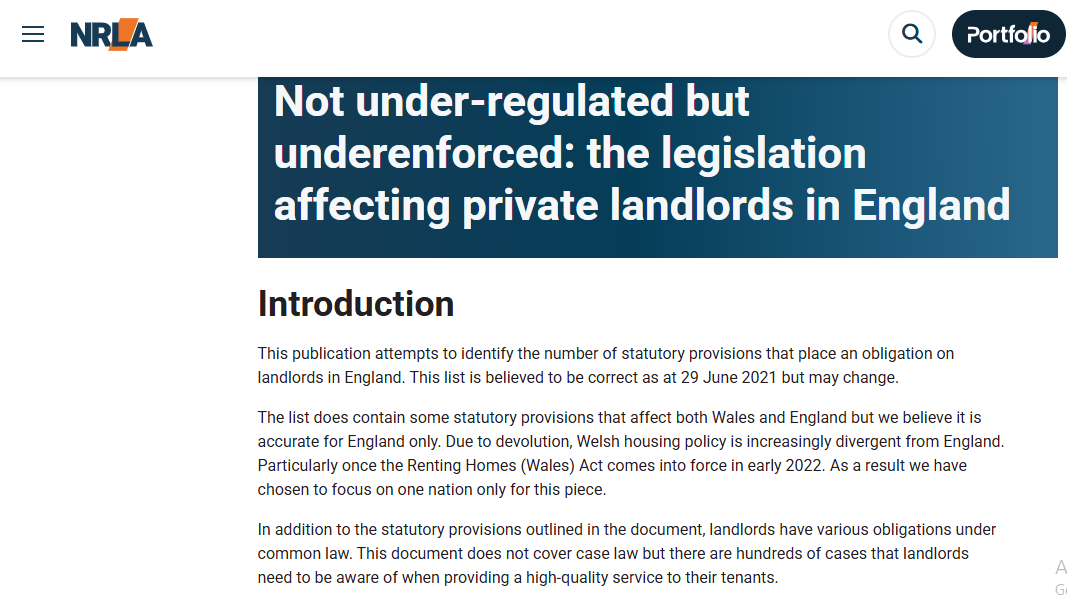
The National Residential Landlords Association (NRLA) argued in a July 2021 publication that England’s private rented sector lacked consistent enforcement rather than regulation.
Its report, Not under-regulated but under-enforced: the legislation affecting private landlords in England, examined statutory obligations as at 29 June 2021. Its figures describe that period, rather than today’s legal position.
Key findings and recommendations
1. Landlord obligations had increased substantially
The report identified 47 additional statutory provisions since 2010. It projected a total of 168 once the then Building Safety Bill became law—an increase of approximately 40% over the decade.
2. One regulation can create several duties
Landlords may need to arrange inspections, supply documents and complete remedial work under the same regulation. Counting laws alone therefore understates the tasks involved.
3. Complexity affects landlords, tenants and councils
Overlapping requirements can make responsibilities, tenant rights and the appropriate enforcement route difficult to identify.
4. Enforcement was uneven
The report cited 2017/18 data showing that 89% of councils reported issuing no civil penalties; more than half lacked a civil penalty policy. These are historical findings, not current enforcement statistics.
5. The NRLA proposed two priorities
It called for stronger use of existing council powers and modernisation of older legislation, including rules concerning electronic communication and changes to joint tenancies.
Angel Moves’ professional counsel to landlords
Inconsistent enforcement does not remove a landlord’s obligations. A quiet history with the council is no assurance that your property or records meet the requirements.
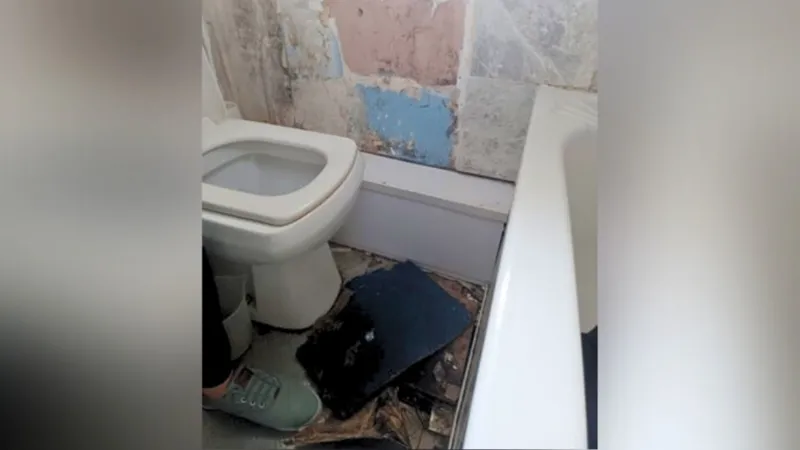
For example, a recurring damp complaint may lead an officer to inspect the property and request photographs, correspondence and repair records. Unresolved defects can require further work and, where the legal conditions are met, lead to formal enforcement.
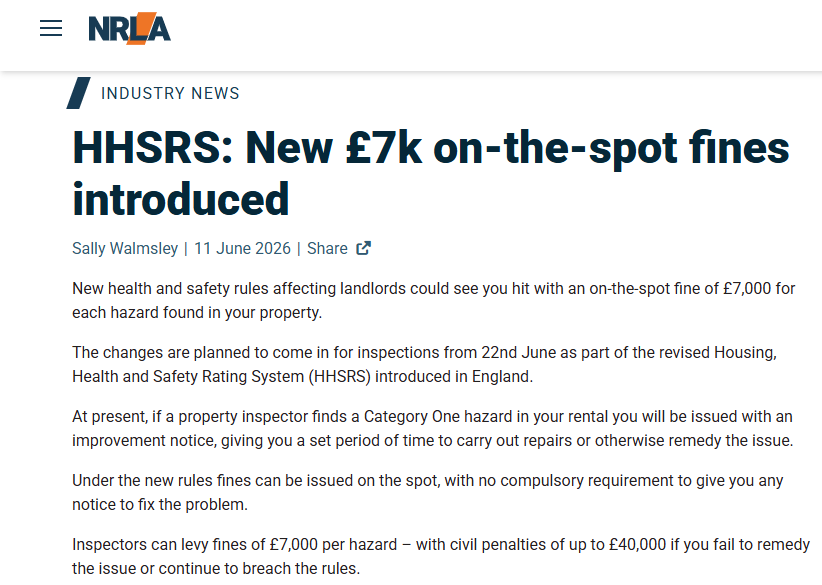
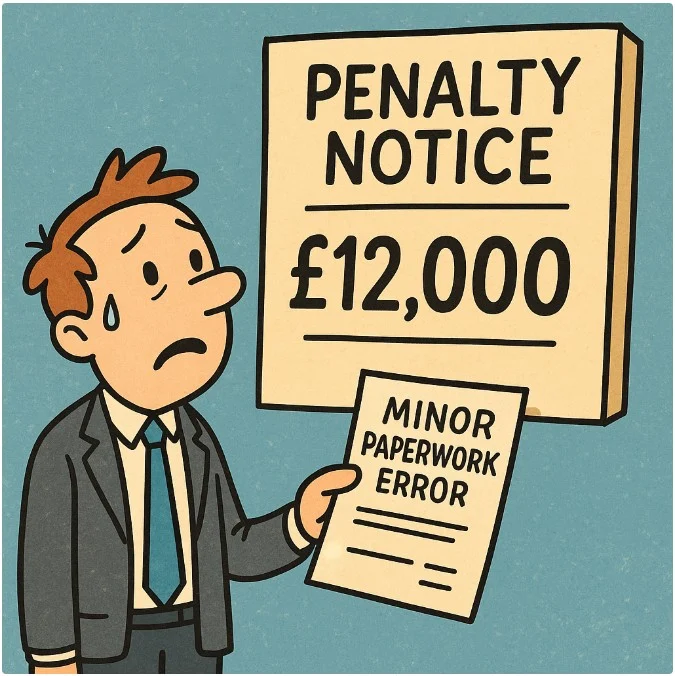
The consequences can include substantial costs: current guidance provides for penalties up to £7,000 for missing required tenancy information and up to £40,000 for certain housing offences. These are separate penalties for different breaches, not automatic charges following a complaint.
Check each property’s condition, documents and outstanding repairs. Record who must act, by when, and how completion will be confirmed. This helps prevent problems and the disruption of reconstructing events during an investigation.
Legislation is national. Enforcement is local.
Contact Angel Moves for a free 30-minute consultation to discuss your portfolio, identify areas needing further checks and explore a property risk assessment focused on HHSRS Category 1 and Category 2 hazards.
Source: National Residential Landlords Association(NRLA)
Related Posts


A Smarter Way for Landlords to Let with Confidence
23rd Dec 2025




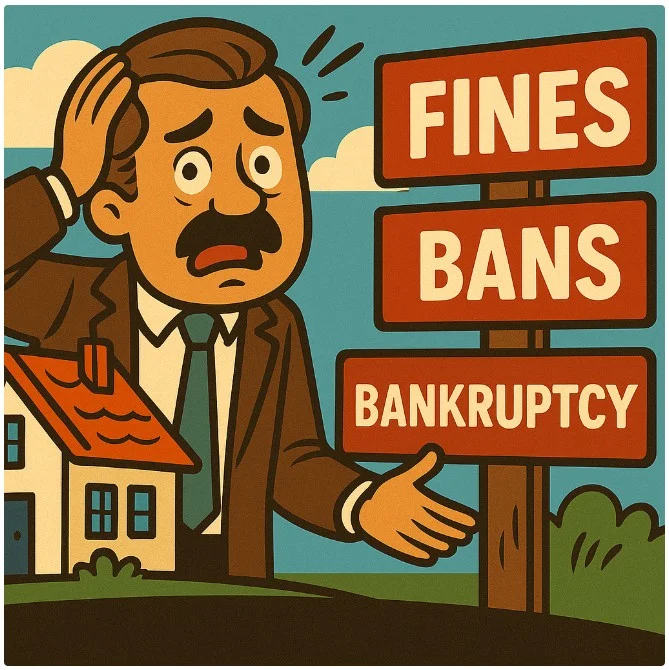
LANDLORDS RISK FINES, BANS AND BANKRUPTCY – THE ANSWER?
19th Jan 2026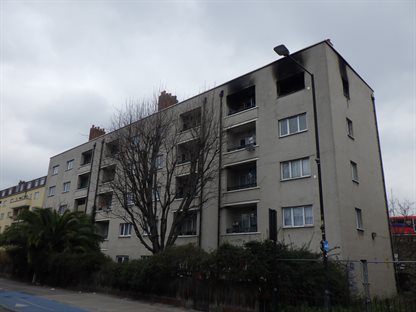
Rogue Landlords Hit With Hefty Fines After Fatal Fire
19th Jan 2026


No-Fault Evictions to End in England from May 2026
19th Jan 2026


Sadiq Khan’s landlord licensing fines near £25m
15th Sep 2026



Landlords face £3.5bn HHSRS penalty exposure
15th Sep 2026